
Heading up the Electrical Engineering department at The Leys College, Terry and Gina Gregory speak about collaborating as a father and daughter team, exciting industry developments and the launch of the college’s new Electrical Installation and Maintenance apprenticeship in this joint interview.
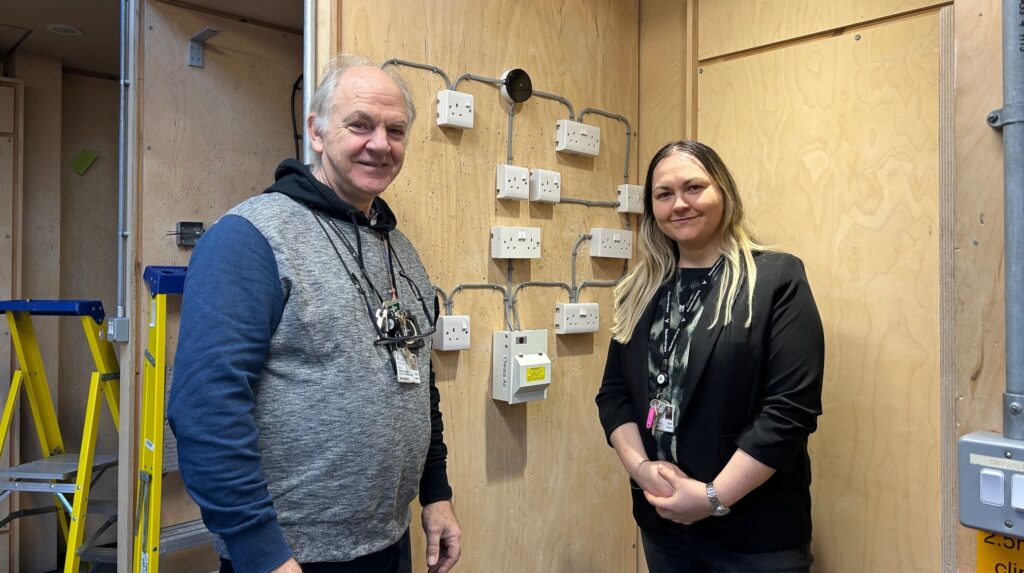
Can you tell me a little bit about yourself and what led you to the role here at The Leys College?
Terry: I started out 14 years ago teaching in High Wycombe. I went over there as a Motor Vehicle tutor, before transferring to Electrical and spent 14 years there teaching all levels, and evening classes. I then went self-employed for a while before joining The Leys College.
Gina: I trained when Terry was working in High Wycombe and then worked alongside him for a while. Then about four years ago, I was brought on part-time at The Leys College, just to cover a couple of evening classes, and then the year after that I took on more hours. Now four years later, I’m full-time and the Curriculum Lead.
What do electrical students learn here and what careers can they aspire to?
Terry: The students will come in from school, potentially knowing nothing about electrical work and they’ll leave after the year with a good grasp of the practical activities and the electrical theory behind it. At that point, they are ready to go into industry as a useful apprentice, and they are much more employable.
Once they’ve got the Level 2 qualification, they can diversify into other areas. They could go into the mainstream industry itself, like the supply authorities. They can go into electric vehicle charging systems or motor vehicles, where of course the new EV systems are now coming out. There are many ways they can diversify once they’ve got the basic knowledge.
Can you tell us about the new Electrical Installation and Maintenance Level 3 Apprenticeship starting in September?
Gina: The way the apprenticeship is structured is that in year one, the students will work three quarters on site, with one quarter dedicated to college. That may be on a day release per week, or a week release per month, depending on the education body and the company that they’re working with. Students first learn about health and safety, the basic knowledge and understanding, and then they advance on the principles that are learnt.
In the second year of the apprenticeship, they’ll cover what we cover on our Level 3 programme – the design behind a circuit, inspection and testing, and fault finding.
The third year of the apprenticeship is dedicated to the portfolio build. That’s when they’ll have assessors come out to visit them on site. They need to take lots of photographs and be aware of the work that they’re doing.
The fourth year is completing their inspection and testing course and preparing for the final endpoint assessment. This is timed over three days, and they’ve got to install, test, inspect and complete all the paperwork.
What is the value of students doing apprenticeships in your industry?
Gina: Since 2021, every person that wants to register as a self-employed electrician or be able to sign off work, now needs an NVQ. There are three different NVQs available depending on a person’s history and experience.
For a 16, 17 or 18-year-old without any experience, a four-year apprenticeship, which we offer at The Leys College, gives them the knowledge that they need, it allows them to define and practise their skills with the back-up of having someone to coach them, and it supports them to go through the whole NVQ process smoothly.
Do you enjoy working and collaborating together as father and daughter and what benefits does it bring?
Gina: Terry has trained me, so everything I know I’ve learned from him. When it comes to the way we think, how we approach situations and our work ethic, we’re on the same page. We don’t have to question what each other is doing because we know how it’s going to be done. That level of trust is already there for us, which just makes the day flow smoother.
Terry: I’m very aware that Gina’s grown up with modern technology, so she has abilities in using AI for example, and all the other new functions which are around now. I sit back sometimes and think, that’d be really nice if I knew how to use it! She’s got to grips with it, and she can actually make the students understand it easier than I can.
Gina: Terry takes charge of the practical work. He can grab a bit of PVC conduit or metal contour and demonstrate something incredibly well. The way he can just visualise things comes across a lot easier. I take on the theory side of things, thinking about how to keep the students engaged – so we bring different skillsets.
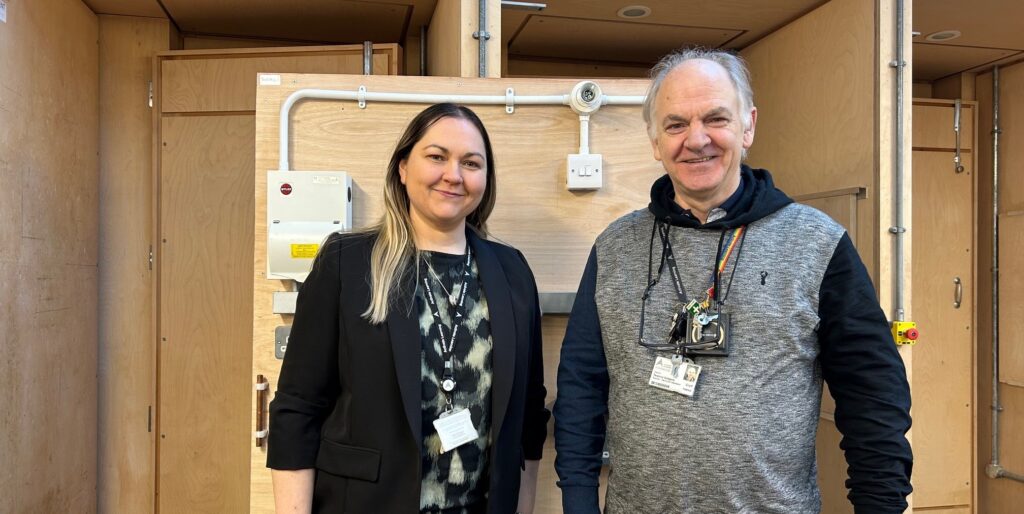
What do you enjoy about working at The Leys College?
Terry: I worked here as a Motor Vehicle Technician around 35 years ago, so I know The Leys College well and it’s almost home to me. The people are friendly and if you need assistance, someone will be there for you. I think it also trickles down to the students. If a student comes and they’re in trouble or have a problem, there’s always someone to help them out.
Gina: There’s an element of recognition and respect here. There’s a friendliness on site, and if you ever feel like you need to go and have a conversation with someone, you can just wander into any department.
What do you like most about working with young people?
Gina: When a student has a eureka moment! Something finally clicks into place, whether that’s academically, personally or behaviourally, and then later when they come bounding out the exam room. We get the results instantly here, so they creep through that door behind you and they’re like, “Have I passed?” You give them the thumbs up and they’re suddenly jumping about going, “Yeah, I’ve done it!”
Especially with those that have had to put in a lot of work, whether that’s through learning disabilities, or perhaps academia in general has never been for them. To see them push through and succeed is what makes it rewarding.
Terry: That also applies to mature evening students. They come in around November time, saying, “I can’t do it” and I say: “Yes you can. Be patient and concentrate.”
Then you get to the end of the year and it’s the final exam and I say: “Yes, you’re good to go”. They look at you in amazement, and their face lights up like sunshine on a warm, sunny day – that’s when I know why I do this job.
Are there any industry developments you’re feeling excited about?
Terry: The industry is changing. EV charging and battery storage systems are coming out, and the supply authorities are now thinking sustainably.
They’re exploring large storage systems for batteries where they’re not just using a small system at home but looking at warehouse sizes. They’re also including solar panels on the roof to charge the batteries up and maintain the energy levels during the night when solar isn’t available.
Does that make the electrical courses here at The Leys College particularly valuable then?
Gina: Absolutely. These students are going to be the people building the future. You’ve got things like solar panel roof tiles coming out. Originally, when these were first mentioned, they just looked like a slate. Whereas now they’ve actually got the different shapes to them and developed ways that they connect.
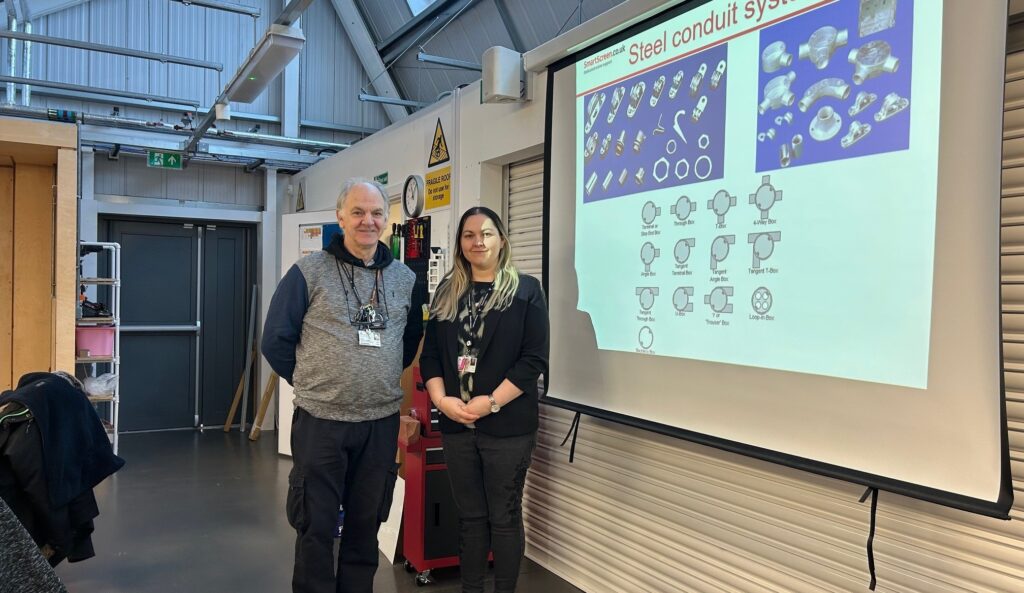
There are smaller modifications coming out too, like with junction boxes. The old design of the screw terminal just didn’t look very good and wasn’t very secure, but now the industry is bringing out snap connectors and making them a lot easier to fit and safer to install.
Terry: Year on year, we change our practical activities to include new technologies to ensure that we’re keeping up with industry needs. So next year, instead of just fitting a small little junction box, they’ll fit one of the new junction boxes, which the industry is going to expect them to know about. We’ll get them ready for going into industry, and that’s what it’s all about.
Discover more about the Electrical Installation and Maintenance apprenticeship at The Leys College or contact Activate Learning via 01865 551 015.
